Nigeria is expected to grapple with some of the consequences of climate change. In this sense, our dedication to addressing climate change issues and protecting the environment is close to our hearts and has remained a top priority for us. As an organization, we aim to continuously reduce the impact of our operations and protect the environment by investing in more renewable energy sources.
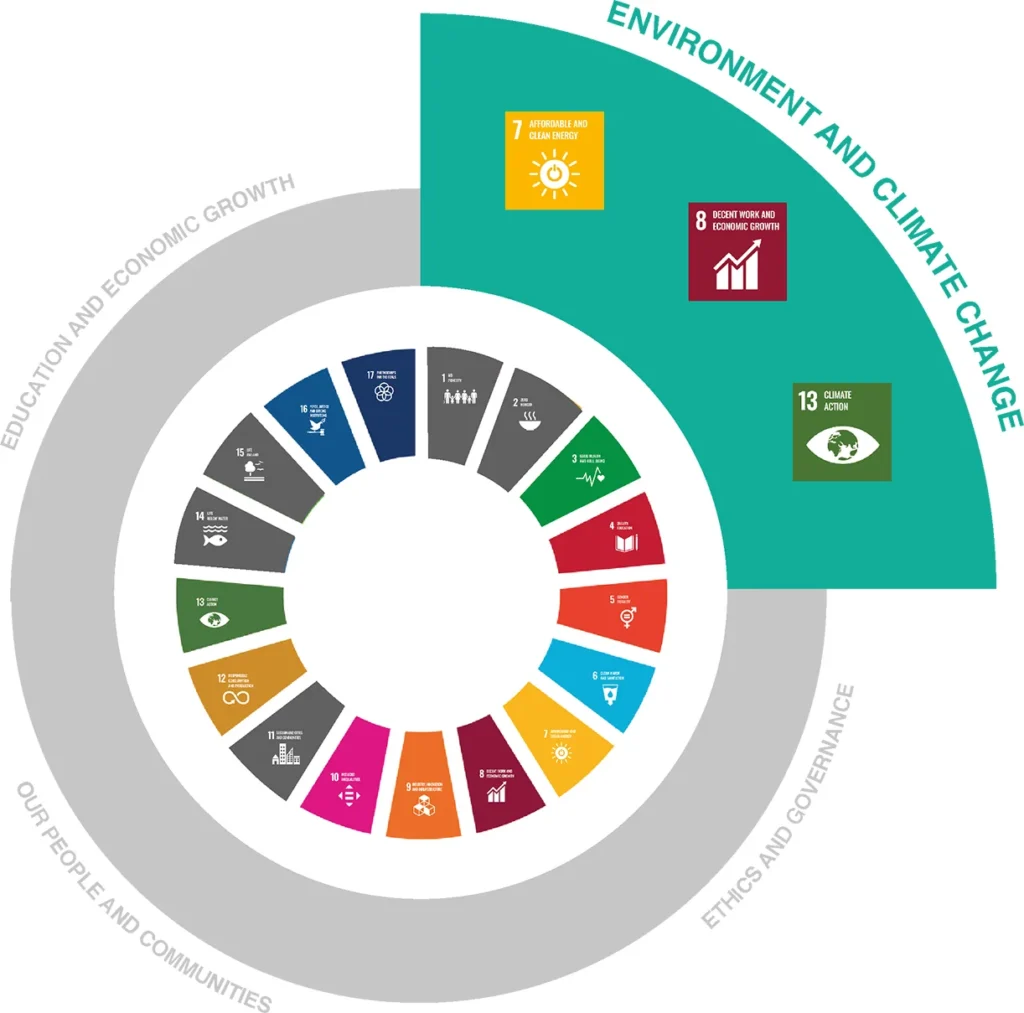
Over 2023 and 2024, we made further progress and are pleased to share a summary of what we have accomplished in alignment with the SDG’s – SDG 7: Affordable and clean energy, SDG 8: Decent work and economic growth and SDG 13: Climate Action.
Many Nigerians continue to face unmet energy needs. Being environmentally conscious whilst adhering to this demand is essential for Nigeria’s economic future. IHS Nigeria has continued to explore and invest in alternative cleaner energy sources, for its operations.
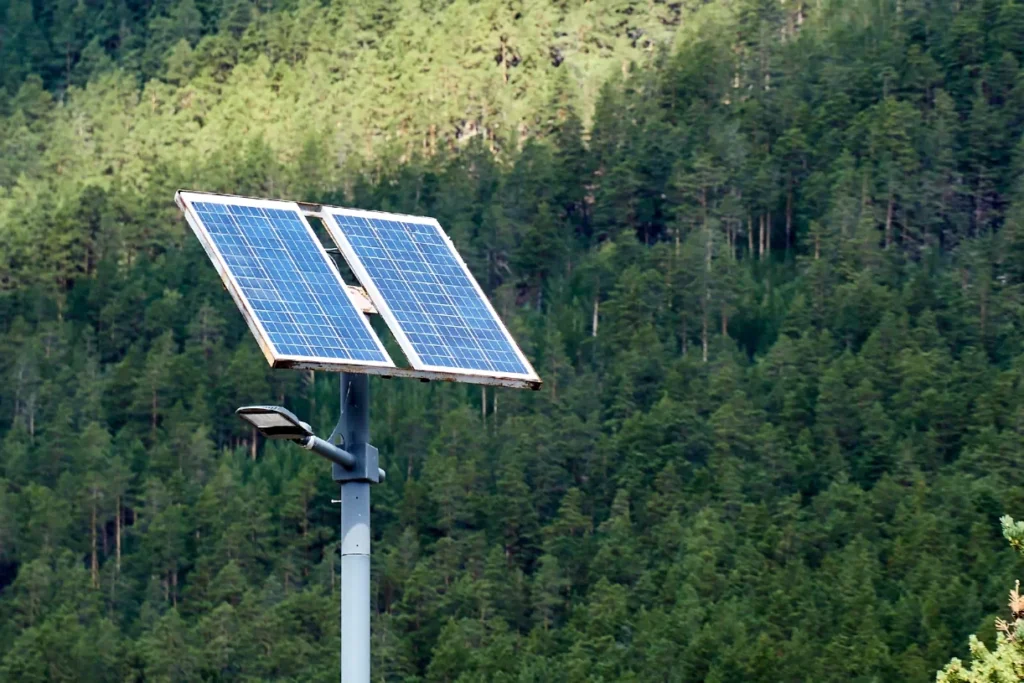
Project Green is the current step in IHS Group’s Carbon Reduction Roadmap. Through Project Green, we continue to prioritize alternative sources of power to reduce our dependency on diesel. This involves integrating solar panels and battery storage solutions at off-grid site locations, as well as investing in connecting more of our sites to electricity grids and providing supplemental solutions at some ongrid tower sites.
As a Group we have reduced our diesel consumption by 49.8 million litres. Also, we continued research and development into the viability of other solutions, including hydropower, fuel cells, gas, energy management systems and other enhanced energy-efficient technologies. In Nigeria, we conducted a hydropower pilot project and began work on a fuel cell pilot. We also explored opportunities for gas, conducting intensive studies into the viability of liquefied petroleum gas (LPG) and compressed natural gas (CNG). As a telecommunications company, we will continuously review all forms of non-diesel power sources and to ascertain the suitability for our tower sites.
In Nigeria, we continued our ongoing initiative to install solar-powered streetlights, donating 144 units to underserved communities in eight states. This project saw IHS Nigeria proactively stepping in to improve the human and environmental condition of lives through the enhancement of community security.
Furthermore, we instigated the installation of 30KVA solar solutions at Royal FM stations in Kwara and Kaduna States. The wave of installations were essential to provide uninterrupted power to these locations, and of course signpost our endorsement of renewable energy use. The objectives of the solar power stations are to decrease reliance on conventional energy, lower carbon footprints, and create more sustainable broadcasting environments.
Our solar endeavours didn’t stop there; we successfully completed Solar-Powered Borehole projects aimed at providing a sustainable, clean, and reliable water source when we constructed and deployed four solar-powered boreholes in Ogbulu Community, Kogi State and the Nigeria Police College in Ikeja, Lagos. Here we significantly enhanced the quality of life, access to clean water, and promoting health and well-being among residents and its surrounding community. Our work here is set to directly impact over 276 beneficiaries.
The above examples demonstrate our work in making clean energy more affordable and accessible. We understand the knock-on effect that resource availability has on communities. Our ongoing solar installations both support the development of green jobs and enable businesses and communities to function with less energy disruption.
Reduced diesel consumption by
We take pride in leading the charge in environmental stewardship initiatives. In 2023, we collaborated with Green Hub Africa (GHAF) to launch the Climate Action Super-Heroes (CASH) program. This initiative focuses on education, awareness, and thought leadership, addressing environmental challenges through innovative solutions and collaborative efforts. In 2024, IHS Nigeria continued its partnership with the GHAF and its CASH initiative, continuing to empower students to become climate ambassadors with a healthy competition. The program focused on school outreaches which culminated in a virtual interschool competition, with Junior Secondary School, Garki, Abuja emerging as the overall winner among 18 participating schools from the six geopolitical zones.
As part of CASH, IHS Nigeria participated in the 50th-anniversary commemoration of WED in 2023, held at the UN House in Abuja under the theme “Solutions to Plastic Pollution.” The event raised awareness and fostered collaboration among stakeholders to tackle pressing environmental challenges. In continuation of our collaboration with the GHAF, we also organized the 2024 World Environment Day celebration at the UN House in Abuja. The event, themed “Land Restoration, Desertification, and Drought Resilience,” focused on highlighting the impact of CASH and attracted approximately 228 people.
Climate Education and Awareness in Schools
In collaboration with Green Hub Africa Foundation, we conducted a stakeholder engagement exercise across schools in Abuja, Kaduna, Cross River, Enugu, Borno, and Lagos States. This effort promoted climate education and awareness among students, educators, and school administrators.
Ecological Restoration
IHS is committed to helping protect biodiversity and ecosystems, including through reforestation efforts.
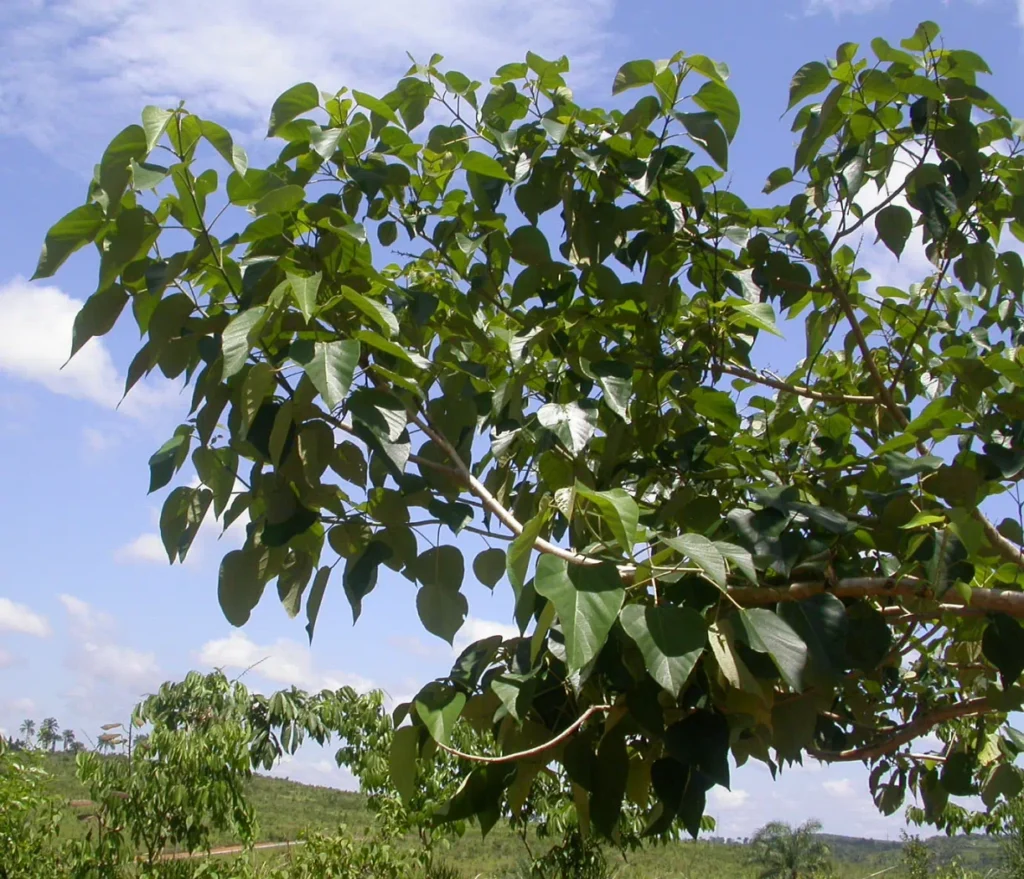
In 2022, IHS commenced a partnership with the Osun State Ministry of Environment on ecological restoration to support reforestation, which led to the establishment of a Tectona Grandis plantation at the Ago-Awu Forest Reserve area located at Ayedaade South Local Government Area (LGA) of Osun State with 4,000 Gmelina Arborea trees planted across five acres of land for the benefit of the environment. In 2023 and 2024, we strengthened our partnership through replanting, weeding, and nurturing of the 4,000 trees.
In 2023, we partnered with the Lagos State Government for the 2nd Lagos State Climate Change Business Meeting. The event brought together key government representatives and industry stakeholders, including Nigerian Association of Chambers of Commerce, Industry, Mines, and Agriculture (NACCIMA) and the Lagos State Ministry of Environment. The meeting emphasized collaboration, innovation, and business engagement in addressing climate change, further demonstrating our commitment to advancing environmental solutions in Nigeria.
In 2024, IHS Nigeria sponsored and participated in two major climate events: the Lagos International Climate Change Summit, themed “Accelerating Climate Finance and Championing Local Adaptation Initiatives” These events brought together over 2,000 attendees, including government officials, regulators, investors, and business leaders, to address critical climate challenges. IHS Nigeria contributed to key discussions, sponsoring panel sessions on topics like private sector investment in climate resilience and enhancing Nigeria’s economic resilience to climate risks, with strong representation from our Sustainability Champions and team members.
In 2024, we spearheaded discussion at an International Press Conference announcing the inaugural convening of the Climate Action Africa Forum (CAAF24) at the Transcorp Hilton Abuja. The conference brought together global leaders, experts, and stakeholders to explore solutions to Africa’s environmental challenges under the theme, “Green Economies, Brighter Futures – Innovating and Investing in Africa’s Climate-Smart Development.”
Nigeria is particularly burdened by waste electrical and electronic equipment (WEEE), with over 1.1 million tonnes of e-waste every year stemming from both local and imported EEE*.
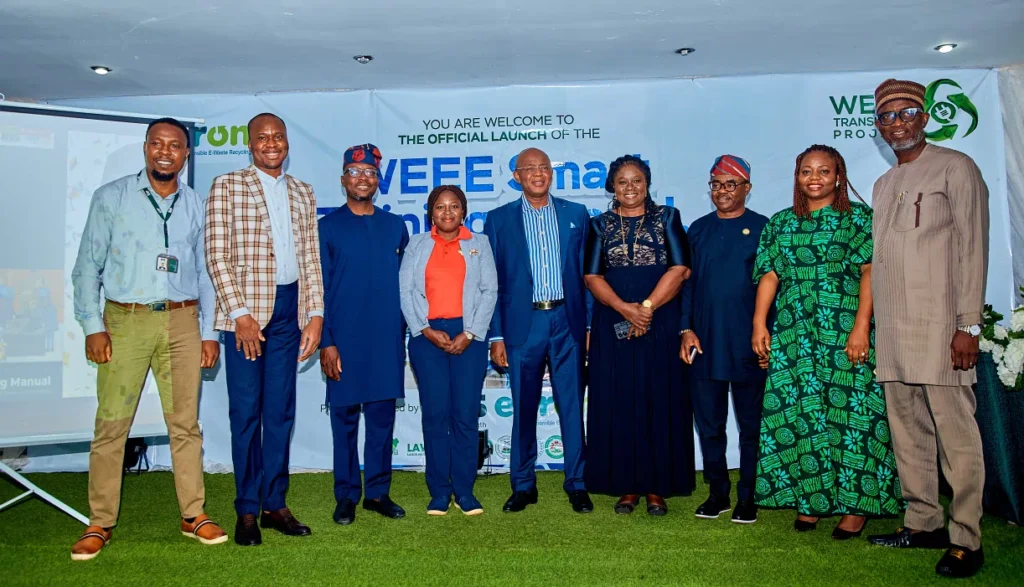
To address this challenge, IHS Nigeria partnered with the E-waste Producer Responsibility Organisation Nigeria (EPRON) to launch the Waste Electrical and Electronic Equipment (WEEE) Transform Project.
The project was officially launched with a virtual inception meeting that outlined its objectives, emphasizing sustainability and proper e-waste management.
We released the “Consumer Behaviour and Perception of Circularity in the Nigerian WEEE Sector” Report and a standard e-waste training manual, both made publicly available online.
A three-day e-waste management training program was held for collectors in two States. The training focused on best practices and was attended by government stakeholders, including representatives from the Ministry of Environment, the National Environmental Standards and Regulations Enforcement Agency (NESREA), and the Abia State Environmental Protection Agency (ASEPA).